The Power of Hope, Perseverance, and the Defining Moments That Shape Our Lives
It was approximately 3:45 on Thursday morning, October 15, 2026, when I found myself reflecting on a word that has accompanied me throughout much of my life. Hope. Such a small word, yet one that carries extraordinary meaning, particularly when we find ourselves facing circumstances we don’t fully understand or know how to navigate. As I sat quietly with my thoughts, I remembered a question someone had asked me many years ago. A question that seemed relatively simple at the time, yet one that has continued to grow in meaning as I’ve traveled through the different seasons of my life. What are you basing your hope on?
As I considered that question, my thoughts traveled back more than fifty years to a young boy growing up in the South Bronx. He was approximately nine years old, and although he didn’t have the language or life experience to explain what he was feeling, he was already beginning to ask questions about himself, the world around him, and what his future might hold. That young boy was me.
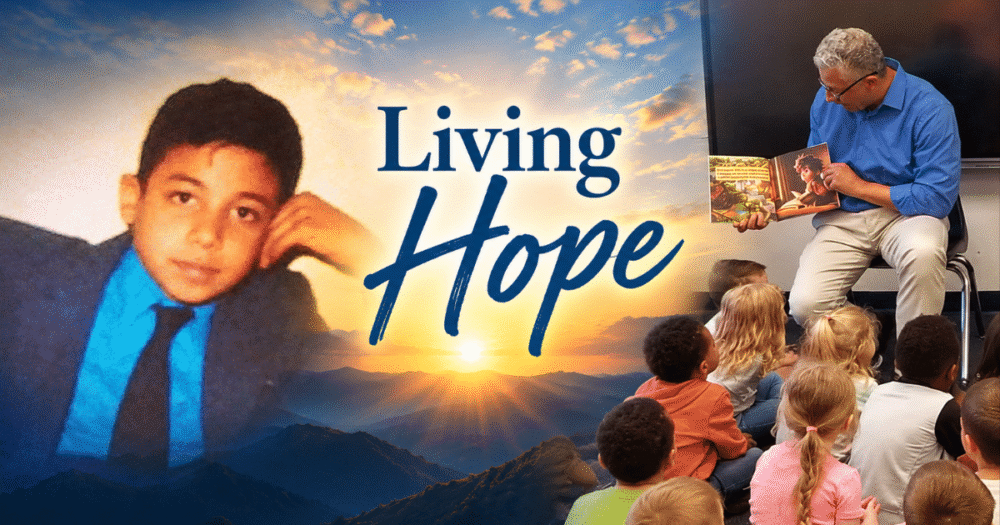
The photograph accompanying this story captures something I find difficult to describe. When I look into the eyes of that nine-year-old boy, I don’t necessarily see hopelessness. I see uncertainty. I see a young human being attempting to understand a world that often didn’t make much sense to him. I see someone who was beginning to recognize that life could be difficult, that the people we depend upon are themselves imperfect human beings, and that the circumstances surrounding us don’t always provide the security or reassurance we need.
I wonder what I was thinking when that photograph was taken. What questions were going through my mind? What was I hoping for? Did I have any idea what the years ahead would bring? Of course not. At that age, I couldn’t possibly have imagined the experiences, relationships, opportunities, challenges, and defining moments that would eventually shape my life. I didn’t know that I would become a martial artist, a professional performer traveling internationally, a husband, a father, a grandfather, an educator, an author, or someone who would dedicate much of his adult life to helping others discover their own strengths and possibilities.
And I certainly couldn’t have imagined the moment captured in the second photograph.
More than five decades later, there I am, sitting in front of a group of young children at The Learning Experience in Mount Laurel, New Jersey, reading one of the children’s books I co-authored with my daughter, Alex. The book was created to encourage children to develop confidence, character, courage, and an understanding of their own abilities. As I look at that photograph today, I find myself wondering what the nine-year-old Peter would think if he could see the older Peter sitting there, sharing stories with children, hoping that something in those stories might help them navigate their own lives.
There is something deeply meaningful about placing these two photographs together. Both come from my personal archives, and each represents a moment in a much larger story. One captures a young boy who didn’t know what his future would hold. The other captures an older man who has lived through enough experiences to appreciate how much of life unfolds in ways we could never have anticipated. Between those two photographs are decades of joy, disappointment, discovery, loss, love, learning, and countless moments that have helped me become the human being I am today.
And woven throughout that journey has been hope.
The Hope I Was Searching For
Growing up in the South Bronx, hope wasn’t something I necessarily understood as a philosophy or principle. It was something I needed, even when I couldn’t explain why. There were moments when life felt uncertain, when the adults around me were dealing with challenges of their own, and when I found myself wondering whether the circumstances I was experiencing would always be part of my life. I wanted to believe that tomorrow could be different from today. I wanted to believe that there was something beyond what I could see or understand at that moment.
Looking back, I recognize that some of my earliest experiences of hope came through other human beings. Sometimes it was a kind word, someone offering food, a place to rest, an encouraging conversation, or simply another person taking the time to acknowledge my existence. These were not necessarily grand gestures. Many of the people who offered them probably had no idea how meaningful those moments would become. Yet those acts of kindness helped me recognize that even when life was difficult, there was still goodness in the world.
I’ve come to believe that we sometimes underestimate the power of these seemingly ordinary encounters. We move through our days interacting with people whose stories we may never fully understand. We see their faces, hear their words, and observe their behavior, yet we rarely know everything they are carrying. A child sitting quietly in a classroom may be dealing with circumstances no one else recognizes. An adult who seems distracted or discouraged may be facing challenges that have exhausted their emotional resources. Someone who appears confident and successful may be quietly questioning their purpose, their direction, or their ability to continue moving forward.
And sometimes, without knowing it, we become part of another person’s reason for holding on to hope.
When I think about the people who encouraged me throughout my childhood and adolescence, I realize that many of them were doing something far more meaningful than offering temporary assistance. They were helping me believe that I mattered. They were helping me recognize possibilities I couldn’t yet see. They were planting seeds that would take years, sometimes decades, to fully understand.
That realization has influenced much of the work I’ve done throughout my adult life, particularly in martial arts, education, storytelling, and community building. I know from personal experience how powerful it can be when someone takes an interest in another human being, especially a young person who may not yet recognize their own worth or potential.
Yet as important as those experiences were, I eventually came to understand that hope needed to become something more than waiting for someone else to encourage me or for circumstances to improve.
I needed to understand what I was building my hope upon.
A Question That Changed My Understanding of Hope
Many years ago, a mentor asked me a question that has remained with me ever since. I don’t remember every detail of the conversation, yet I remember the question clearly.
“Peter, what are you basing your hope on?”
I had probably been talking about something I wanted to accomplish or a situation I hoped would improve. Like so many of us, I was accustomed to using the word hope in everyday conversation. I hope this happens. I hope I get that opportunity. I hope things work out. I hope someday I’ll be able to accomplish that dream.
There’s nothing inherently wrong with those statements. Dreams are important. Aspirations can inspire us. The possibility of a better future can help us endure difficult circumstances. Yet my mentor was inviting me to examine something deeper than the outcome I desired.
What was the foundation beneath my hope?
Was I simply wishing for something to happen? Was I depending upon circumstances beyond my control? Was I waiting for another person to make a decision that would change my life? Or was I grounding my hope in beliefs, values, virtues, and actions that could help sustain me regardless of the outcome?
That question challenged me to consider the relationship between hope and personal responsibility. It encouraged me to examine whether my daily choices reflected the future I said I hoped for. Was I developing the discipline necessary to pursue my goals? Was I practicing patience when progress was slow? Was I willing to learn from mistakes, accept correction, and continue growing? Was I cultivating courage, humility, compassion, perseverance, and self-control? Was I willing to seek understanding rather than immediately judging situations or people I didn’t fully comprehend?
These questions didn’t provide immediate answers to every challenge I faced. They did, however, begin to change the way I understood hope. I started to recognize that hope could be more than a feeling or a wish. It could become a way of living, a commitment to align my beliefs, values, and actions with the kind of human being I wanted to become.
Over the years, martial arts reinforced many of these lessons. Training taught me that progress requires patience, consistency, humility, and the willingness to remain a student. There were days when I felt strong and capable, and other days when I struggled with techniques, physical limitations, or my own expectations. The lessons weren’t always found in accomplishing what I had set out to do. Sometimes the most meaningful lessons came from recognizing what I didn’t yet understand and being willing to continue learning.
Life has taught me much the same thing.
We cannot control every circumstance, guarantee every outcome, or prevent every disappointment. We can, however, continue developing the qualities that help us respond more thoughtfully and skillfully to whatever circumstances we encounter.
That understanding has become an important part of what I mean when I speak about Living Strong.
Hope Is More Than a Wish
One of the most important distinctions I’ve come to appreciate is the difference between wishing for something and developing a foundation for hope. Wishing often focuses our attention on a desired outcome. We imagine something happening, circumstances improving, or an opportunity presenting itself. Hope can include those desires, yet it can also become something much deeper. It can influence how we live while we’re waiting, how we respond when things don’t go as expected, and how we continue moving forward when the future remains uncertain.
There have been many moments throughout my life when I hoped for something that didn’t happen. Opportunities that didn’t materialize. Plans that changed. Relationships that evolved in unexpected ways. Circumstances that required me to reconsider what I believed was possible. Some of those experiences were disappointing. Others were painful. And some took years before I could begin to appreciate what they had taught me.
What I’ve learned is that hope doesn’t guarantee a particular outcome. We can work diligently, make thoughtful decisions, treat people with respect, and remain committed to our values, yet still experience disappointment or loss. Life doesn’t always reward effort in the ways we expect. Circumstances beyond our control can change the direction of our lives, sometimes without warning.
Yet our capacity to grow, learn, care for others, and find meaning doesn’t have to disappear simply because a particular outcome doesn’t unfold as we had imagined.
This is where I believe virtues become so important. Courage allows us to acknowledge fear while continuing to act thoughtfully. Patience helps us recognize that meaningful growth often requires time. Humility reminds us that we don’t have all the answers. Perseverance encourages us to continue learning and developing even when progress is difficult. Compassion helps us recognize that others are navigating challenges of their own.
These qualities don’t eliminate uncertainty. They help us become more capable of living with it.
And perhaps that’s one of the most meaningful expressions of hope: the willingness to remain engaged with life, even when we don’t know exactly how the next chapter will unfold.
Becoming Someone Else’s Reason for Hope
As I return to the photograph of me reading to those children, I find myself reflecting on something that has become increasingly important to me throughout the years. We never fully know the impact our words, actions, and presence may have on another human being.
When I was nine years old, I couldn’t have known that one day I would spend almost thirty years serving families through martial arts education. I couldn’t have imagined the thousands of conversations, lessons, classes, and experiences that would become part of that journey. I certainly couldn’t have anticipated the opportunity to write books, share stories, and encourage people to recognize their own abilities and possibilities.
Yet when I look back, I can see how many of those opportunities grew from the lessons and experiences of my earlier years. The uncertainty I experienced as a child helped me develop compassion for others who may be struggling. The people who showed me kindness helped me understand the importance of making others feel seen, heard, appreciated, and valued. The challenges I encountered encouraged me to develop perseverance, discipline, and a willingness to keep learning.
And the questions I carried as a young boy eventually became part of the questions I now encourage others to consider.
What can I do to make this better? What can I do to not make it worse? What am I missing here?
These three questions, which I discuss throughout my book, Living Strong Through Martial Arts: A Lifetime Journey of Martial Virtue, have become an important part of how I approach life’s defining moments. They encourage awareness, thoughtful assessment, and appropriate action. They remind me that even when circumstances are difficult, there may still be something meaningful I can do.
And sometimes that meaningful action is simply offering another person a little hope.
I think about the children sitting in front of me in that photograph. Each one has a story that is still unfolding. Each one will experience moments of joy, confusion, disappointment, accomplishment, and uncertainty. Each one will encounter people and circumstances that influence how they understand themselves and the world around them.
I cannot know what their futures will hold. I cannot protect them from every difficulty or guarantee that their dreams will unfold exactly as they imagine.
What I can do is offer encouragement. I can share stories that invite them to think, imagine, ask questions, and recognize their own abilities. I can help create an environment where they feel respected and valued. I can remind them that growth is possible, that mistakes are opportunities to learn, and that their worth is not determined by a single accomplishment or failure.
And perhaps, many years from now, one of those children will remember a moment when someone took the time to encourage them.
Just as I remember the people who encouraged me.
That is the power of hope when it becomes something we share.
Living Strong With Hope
At 65 years old, I continue to discover that living strong is not about having everything figured out. It is not about being physically strong every day, feeling confident in every situation, or having the answers to every question. It is not about pretending that difficulties don’t exist or insisting that we remain positive regardless of what we’re experiencing.
Living Strong, for me, is about becoming more skillful at being human.
It is about developing ourselves mentally, emotionally, physically, and spiritually. It is about learning to recognize our thoughts and emotions, understand our circumstances, and respond in ways that reflect our values. It is about practicing courage when we are afraid, patience when we are frustrated, humility when we are mistaken, compassion when others are struggling, and perseverance when progress seems slow.
And it is about understanding that hope and action can work together.
Hope can help us imagine possibilities beyond our present circumstances. Our values can help us determine which possibilities are worth pursuing. Our willingness to learn, work, seek understanding, and persevere can help us take meaningful steps in that direction.
Yet even when those steps don’t lead to the outcome we expected, the effort can still shape who we become.
I’ve learned that some of life’s most meaningful growth occurs during seasons we would never have chosen for ourselves. Those seasons can challenge our assumptions, reveal our limitations, and invite us to examine what truly matters. They can also deepen our appreciation for relationships, kindness, and the opportunities we have to serve others.
I think that’s part of what makes hope so powerful. It allows us to recognize that the story of our lives is still unfolding, even when we find ourselves in a chapter we don’t particularly enjoy.
The nine-year-old Peter in that photograph didn’t know what the next chapter would bring. He couldn’t see the opportunities, relationships, accomplishments, or challenges that were waiting for him. He didn’t know the people who would influence his life or the ways in which his own experiences might eventually influence others.
He was simply a young boy, living in the circumstances of his time, wondering what might become of him.
And today, the 65-year-old Peter is still learning, still asking questions, still growing, and still discovering what it means to live with hope.
There are dreams I continue to pursue, lessons I have yet to learn, and opportunities I hope to experience. There are also uncertainties I cannot resolve simply by wishing they would disappear.
What has changed is my understanding of what I want my hope to rest upon.
I want it grounded in my values, the virtues I seek to practice, the people I love, the principles I hold dear, and my willingness to continue growing and serving others.
I want my hope to be reflected not only in what I say I believe, but in how I choose to live.
What Are You Basing Your Hope On?
As I sit here in the quiet of this Thursday morning, I find myself returning once again to the question my mentor asked me so many years ago.
What are you basing your hope on?
I wonder how many of us have stopped long enough to genuinely consider that question. We often speak about the things we hope will happen. We hope our circumstances will improve. We hope our children will be happy and successful. We hope our relationships will grow stronger. We hope for better health, financial security, meaningful work, and opportunities to fulfill our dreams.
These are understandable human desires. They reflect our longing for stability, belonging, purpose, and a meaningful future.
Yet what happens when circumstances don’t change as quickly as we would like? What happens when a door closes, a relationship changes, an opportunity disappears, or life takes an unexpected direction? What happens when the future we imagined begins to look different from the one unfolding before us?
Does our hope disappear along with the outcome we were expecting?
Or have we developed a foundation that allows hope to remain present even when our circumstances change?
For each of us, that foundation may look different. It may be found in deeply held beliefs, core values, meaningful relationships, service to others, a commitment to personal growth, or something that gives our lives a sense of meaning and purpose.
What I hope we can share is a willingness to examine the foundations upon which we’re building our lives.
Are we simply wishing for a better tomorrow, or are we also living in ways that reflect the values and virtues we believe can help us move toward that tomorrow?
Are we allowing our circumstances to determine our entire sense of possibility, or are we continuing to develop the awareness, courage, patience, and perseverance needed to navigate them?
And perhaps one of the most important questions of all: Are we becoming people who help others hold on to hope?
I look once more at those two photographs. A nine-year-old boy from the South Bronx and a man in his sixties reading to children in New Jersey. Two moments separated by more than fifty years, connected by a lifetime of experiences that neither photograph could ever fully capture.
If I could sit beside that young boy today, I don’t think I would tell him that everything is going to be easy or that every dream will come true. I know too much about life to make those promises.
I would tell him that there will be people who care about him, even during moments when he feels alone. That he will discover abilities he doesn’t yet recognize. That he will experience love, friendship, meaningful work, and opportunities he cannot begin to imagine. That he will make mistakes, face disappointment, experience loss, and encounter circumstances that challenge his understanding of himself and the world.
And I would encourage him to remain curious, to keep learning, to develop his character, to seek wisdom, and to hold on to hope.
I would remind him that his present circumstances are not necessarily his final destination.
And perhaps I would tell him that one day, the very experiences he is struggling to understand may become part of the stories he shares to encourage someone else.
That thought fills me with gratitude.
Because the young boy who once searched for hope has grown into a man who now has the opportunity to share it.
And the journey continues.
So today, I invite you to spend a few moments reflecting on the same question that has stayed with me for so many years.
What are you basing your hope on?
And as you consider your answer, perhaps ask yourself one more question.
Whose life might be strengthened by the hope you have an opportunity to share?
Remember, you’re never too old, broken, bruised, or beat to grow stronger, discover meaning, and live strong.
You are stronger than you think.
Live Strong.
Peter Simon Liciaga
Founder, Living Strong Projects
About the Photographs
The two photographs featured in this reflection come from my personal archives. The childhood photograph captures me at approximately nine years old, growing up in the South Bronx, New York. The second photograph shows me in my early sixties, reading one of the children’s books I co-authored with my daughter, Alex, to a group of children at The Learning Experience in Marlboro, New Jersey. I brought these two moments together using AI-assisted design and digital editing tools to illustrate the journey between a young boy uncertain about his future and an older man grateful for the opportunity to inspire, encourage, and empower others through storytelling. The photographs represent two authentic moments in my life, separated by more than five decades, connected by the enduring power of hope.