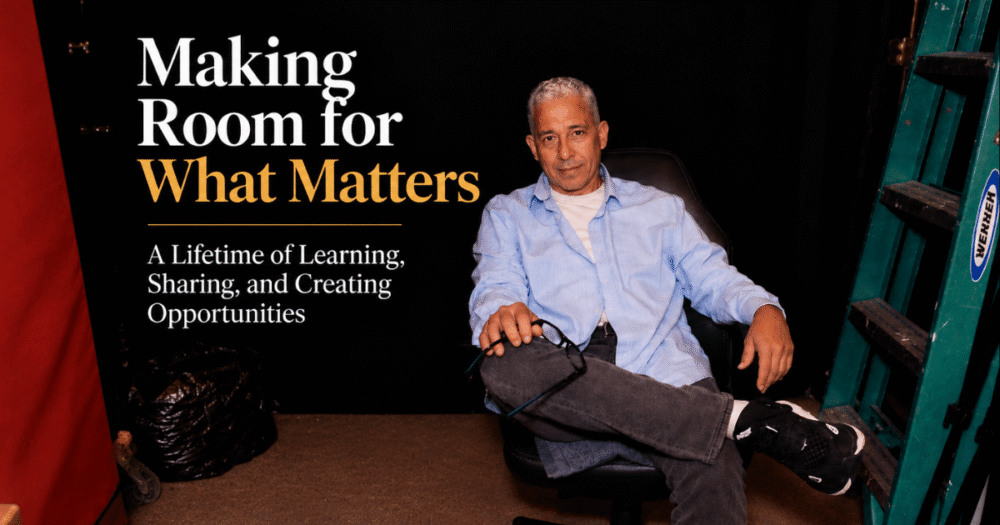
Rethinking the Economics of Martial Arts and Expanding Access to Knowledge
After more than five decades in martial arts and almost thirty years of teaching in the Mount Laurel community, I’ve been giving considerable thought to how we make martial arts education accessible to more people.
That question has become an important part of the development of Living Strong Family Martial Arts. I’m building a program that brings together personal instruction, freely accessible educational resources, and community partnerships. By making thoughtful use of existing spaces and today’s technology, I can focus more of my resources on the educational experience while creating opportunities for more individuals and families to participate.
This approach reflects something I’ve come to appreciate throughout my life: meaningful education depends not only on the knowledge we possess, but also on our willingness and ability to share it. My understanding of that began long before I became an instructor.
An Opportunity That Changed My Life
I grew up in the South Bronx, where my first opportunity to study martial arts came at no cost to my family. There was an arrangement in place that allowed me to participate, something my mother could never have afforded on her own. Looking back, I recognize how significant that opportunity was. Martial arts became an important part of my life, influencing how I understood discipline, responsibility, relationships, and personal growth.
Throughout the years, I continued to benefit from the generosity of people willing to share their knowledge. While performing in the national tour of Starlight Express, I trained with Jimmy Lockett. We practiced backstage or in rooms that hotels made available to us during the tour. Later, while performing in Germany, I trained with Arndt Malleepre in a gym owned by a mutual friend. Having access to that space allowed us to train without the expenses associated with a commercial martial arts program.
Those experiences helped shape my understanding of martial arts education. The knowledge wasn’t free because it had no value. It was shared freely because someone understood the value of passing it on. I’ve carried that lesson with me throughout my years as an instructor, and it continues to influence how I approach teaching today.
The Economics of Education
Operating a martial arts school involves considerable expenses. Rent or mortgage payments, utilities, insurance, flooring, equipment, maintenance, administration, and instructor compensation all contribute to the cost of running a program. These are legitimate expenses, and dedicated facilities provide important benefits, particularly for schools offering specialized training, extensive schedules, and multiple programs.
However, those costs also influence tuition. Depending on the program and the number of family members participating, martial arts education can represent a substantial financial commitment. Some programs charge $300 or more per month, and families enrolling several children may face considerably higher costs. Tuition varies widely, and the services offered differ from school to school, but these financial realities raise an important question: Can we reduce the cost of delivering martial arts education without compromising the quality of instruction?
I believe we can, provided we’re willing to examine how we use our resources and recognize the opportunities available to us today.
One of those opportunities is technology. When I began studying martial arts, learning was largely dependent on being physically present with an instructor. Today, books, articles, instructional videos, and online educational resources allow us to share knowledge far beyond the classroom. Students can review movements at home, parents can better understand what their children are learning, and individuals who may never attend a particular school can still benefit from its educational resources.
This is one reason I’m developing a freely accessible educational library through Living Strong Family Martial Arts. My book, Living Strong Through Martial Arts: A Lifetime Journey of Martial Virtue, provides a foundation for many of the principles I teach. Alongside it, I’m creating instructional videos, educational materials, and student journey journals that connect classroom learning with everyday life. The online videos and educational resources are intended to remain freely available, whether someone participates in the in-person program or not.
Of course, access to information isn’t the same as personal instruction. An experienced instructor provides observation, feedback, encouragement, and guidance that cannot be fully replicated through a book or video. Just as importantly, the relationships developed between students, families, and instructors contribute to the learning experience. Technology allows us to share knowledge more widely, while personal instruction helps people understand, practice, and apply it. Both have value, and they can complement one another.
When Community Creates Opportunity
As I began developing Living Strong Family Martial Arts, my friend Mark Grossman, owner of The Learning Experience in Mount Laurel, offered to host the program at his early childhood education center. His generosity provided an opportunity to begin teaching in an existing educational environment without taking on the substantial financial responsibilities of leasing and equipping a separate commercial facility.
I’m deeply grateful to Mark and the team at The Learning Experience for their encouragement and willingness to support this initiative. Their partnership illustrates something I’ve come to appreciate throughout my life: meaningful opportunities often emerge through relationships and the thoughtful use of resources already available within a community.
For my program, this arrangement allows me to concentrate more of my resources on instruction, curriculum development, educational materials, and the students themselves. It also allows me to structure tuition differently. Our initial six-week program is $179 for six in-person classes, supported by educational resources students and families can access beyond the classroom. The goal is to establish an approach that is both accessible to families and sustainable for the instructor.
Developing this program has encouraged me to distinguish between what is essential to the educational experience and what may be necessary for a particular business model. For the introductory program I’m offering, I need a safe, appropriate space where students can move comfortably, educational materials to support their learning, and the opportunity to provide meaningful personal instruction.
Other forms of martial arts training may require specialized facilities and equipment, and I respect those needs. For the curriculum I’m developing, however, an existing educational space provides what is necessary. This approach also raises possibilities beyond my own program. Communities have classrooms, recreation centers, multipurpose rooms, and other facilities that may be available during certain hours. Partnerships between educators, business owners, and community organizations could help make better use of these spaces while expanding access to educational opportunities.
Knowledge That Continues to Serve
One of my long-term goals is to develop an educational library that exists independently of my in-person teaching. I want the knowledge and principles I’ve spent a lifetime studying to remain accessible to people regardless of where they live, their age, or whether they’re enrolled in a martial arts program.
Through videos, written materials, and other resources, I hope to share approaches to movement, awareness, focus, respect, self-control, and personal development that people can apply in their own lives. This is particularly meaningful to me because so much of what I’ve learned came from people who generously shared their knowledge. I see an opportunity to continue that tradition using the tools available to us today, creating something that can grow and continue serving others over time.
Living Strong Family Martial Arts will continue to evolve. There may eventually be a dedicated facility or additional community partnerships. I’m open to those possibilities as the program develops. For now, I’m grateful that we can begin with the resources and relationships already available.
When I think about my first experience with martial arts as a child in the South Bronx, I’m reminded how much one opportunity can influence the direction of a person’s life. I couldn’t have known then where that experience would lead. Today, I have the privilege of sharing what I’ve learned, supported by people in my community who believe in creating opportunities for others.
The value of martial arts education isn’t determined by the building in which it takes place, but by what people learn and how they carry those lessons into their lives. That’s the foundation on which I’m building Living Strong Family Martial Arts—an approach to martial arts education and human development that seeks to connect people, strengthen families, empower children, and help us become more skillful at being human.
Connect People. Strengthen Families. Empower Children.
The strength of a community lives in its people.
— Master Peter Simon Liciaga
Living Strong Family Martial Arts