Returning to the Bronx at 65, I went looking for the places that helped shape my life. I came home understanding some of those moments—and myself—a little differently.
Written and read by Peter Liciaga
Prefer to read? The complete story begins below.
Yesterday, at 65 years old, I went back to the Bronx with my childhood friend and best friend, Danny Solbagnoli. Danny and I have known each other for more than 50 years. We met as kids, somewhere around sixth grade, and our lives have crossed through more seasons than either of us could have understood back then. I went back wanting to see some of the places where I grew up, take photographs, record some video, sit with Danny and talk, and simply pay attention. That last part became more important than I expected. There is a thought that has been following me for some time now: If I had known how important those moments were, I would have paid more attention. Yesterday, I paid attention.
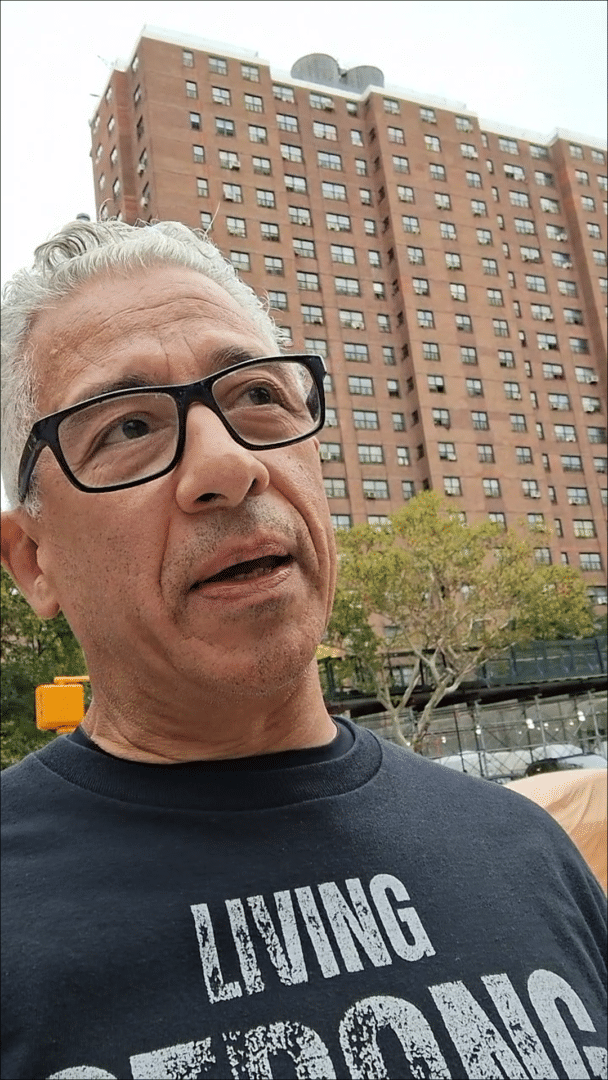
One of our first stops was the Mitchel Houses, where I lived as a young boy. My mother used to tell me that our family was among the first families to move into the projects when they were new. Before that, we had lived in terrible conditions not far away. Getting that apartment represented something better for her and for her five children. There were five of us. My sister Loretta was the oldest. I was second. Then came Tony, Carol and Mary. When I look back now, I understand that my childhood cannot be reduced to one simple story. My father abused alcohol and was violent toward my mother. Eventually, she made the decision to lock him out and divorce him. I was only around seven or eight years old the last time I remember seeing him as a child. I would not see him again until I was in my fifties, shortly before he died.
My mother had her own struggles with alcohol after my father was gone. There were times when she was not the mother we needed her to be. There were reasons I did not want to be home, and eventually there were periods when the streets became where I lived. Those truths matter. So do some other truths. My mother was raising five children. She fought to get us into better housing. She found ways to put us in school. She worked. She sacrificed. She made mistakes, sometimes serious ones. And in many moments, with whatever she understood and whatever she had available to her, she gave it her best. At 65, I can hold more than one truth at the same time. I don’t have to rewrite the painful parts of my childhood to recognize my mother’s courage, and I don’t have to turn her into a saint in order to have compassion for the human being she was.
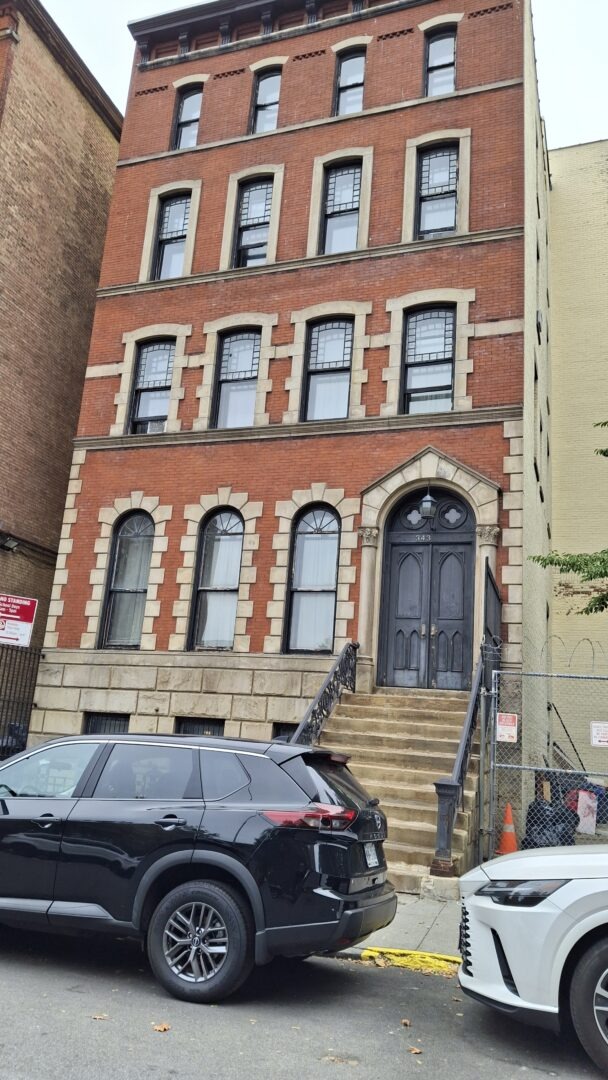
From our apartment at the Mitchel Houses, we could look toward St. Jerome’s, where I attended school through fifth grade. Nearby was the convent, where my mother cleaned to earn money and help pay for our schooling. Standing there again all these years later made me think about something Danny and I talked about during the day: the difference between being the best, doing your best and giving it your best. “Be the best” is comparative. There is always somebody stronger, faster, smarter, more successful or more accomplished. Even “do your best” can become an impossible standard if we use it to mean that every single thing we do must represent the absolute maximum of our ability. Human beings don’t live that way.
Giving it your best means something different to me. It means showing up to the moment as the imperfect human being you are, with what you know and what you have, taking responsibility for your actions, learning what you don’t know, making adjustments and giving the next moment your best. That does not excuse the harm we cause. Sometimes what a person is capable of giving is simply not enough for the people who need them. Responsibility still matters. Giving it your best means facing that truth too.
I also went back to places where things were happening that I couldn’t possibly have recognized as important at the time. I remembered playing around P.S. 154. I remembered the gym, doing duck walks, climbing ropes and discovering that I was pretty good at climbing them. Somewhere in those early years, I was introduced to Judo. I had no idea what that moment would eventually mean. That’s one of the things about defining moments: they rarely announce themselves. They don’t usually stop us and say, “Pay attention. Fifty years from now you’re going to understand why this matters.” Most of the time, they’re just Tuesday afternoon. Then decades pass.
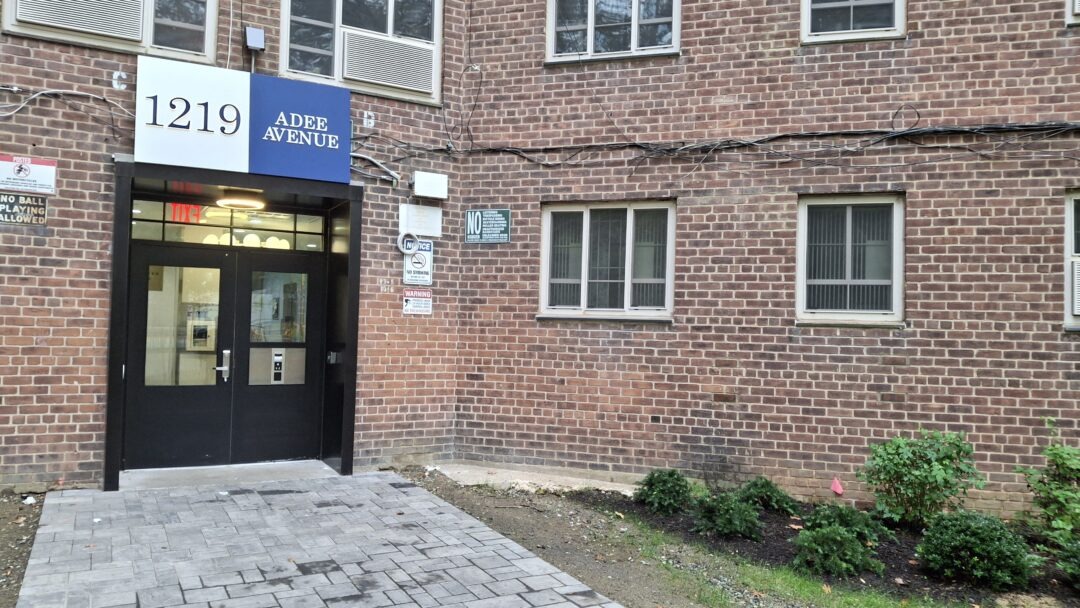
After fifth grade, my mother moved our family across the Bronx to Eastchester Gardens. I stood outside 1219 Adee Avenue again. Our kitchen window was immediately beside the entrance, overlooking what we called the Big Park. My mother could look out that window and see much of the world where we played. I went inside the building and stood in front of our old apartment. There were the two doors. Ours was the one on the right. For a moment, I wasn’t simply a 65-year-old man looking at an apartment door. I could see the Puerto Rican kid from the Bronx who once walked through it.
I walked through the Big Park and stood near the handball wall where I used to play handball and later paddleball. Much of it has changed. Some of it felt remarkably familiar. Then I went back to the community center, a building with enormous meaning in my life because it was there that I began formally training in karate with a man named Arthur. Yesterday, Danny gave me back a memory I had lost. He told me that he trained there too. He remembered Eric being there. He remembered Arthur. He remembered sitting in a low horse stance for what felt like forever while throwing punches. He remembered the training being tough. I didn’t remember Danny being there at all. Later in his life, Danny continued training and eventually reached brown belt in Taekwondo before life took him in another direction. I listened to him tell me these things and thought again: If I had known how important those moments were, I would have paid more attention. I can’t go back and pay more attention to those moments. I can pay more attention to this one.
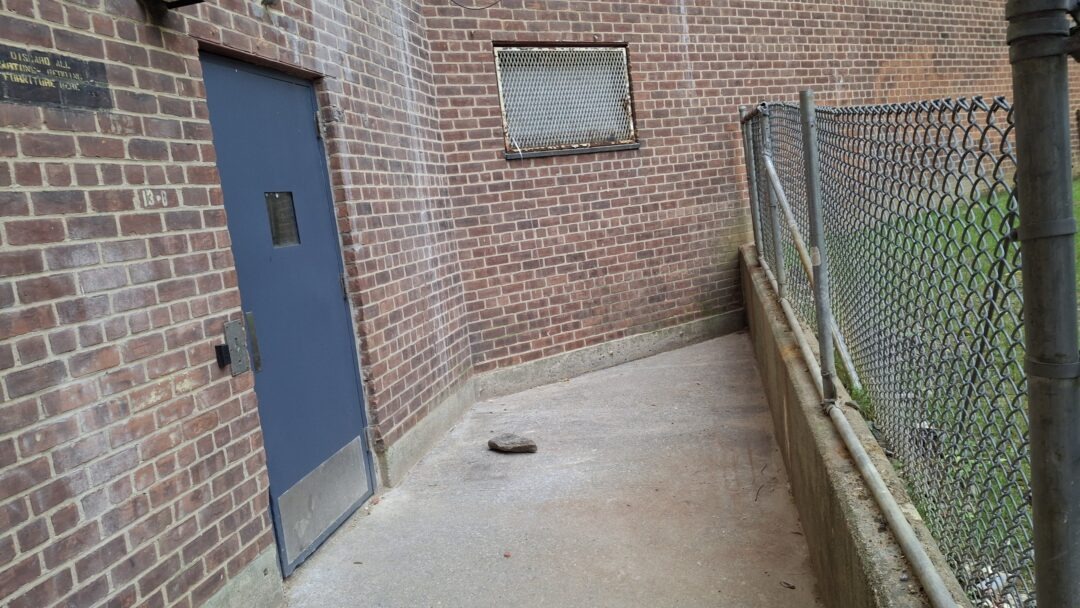
Then I walked around the back of my old building and came to a small ramp leading to a back door. I stopped. When I was a young teenager and living in the streets, there were nights when I slept in that corner. Back then there would be trash and discarded newspapers there. On cold nights I would gather the newspapers, pile them underneath and around myself and use them for whatever warmth they could provide. I remember being dirty. I remember sitting there feeling hopeless. I remember wondering where my life was going and what I was going to do. What struck me yesterday was how small that corner actually is. When I was a boy, it seemed much larger. Maybe that’s because at the time it felt like my whole world.
Standing there at 65, I wanted to speak to that kid. I wanted to tell him, You have no idea what’s ahead of you. Just make it to the next moment. That boy couldn’t see classical ballet or musical theater. He couldn’t see himself performing internationally. He couldn’t see decades of martial arts, a wife, children or grandchildren. He couldn’t see the thousands of students he would someday teach. He couldn’t see books with his name on the cover. He couldn’t see this article. And he certainly couldn’t see a 65-year-old version of himself standing in that same corner looking back at him.
That’s something I want anyone reading this who is struggling to understand: don’t assume that because you cannot see your future, there isn’t one. Sometimes the next great act of courage isn’t changing your entire life. Sometimes it’s simply making it to the next moment.
That little corner also made me think about something else. Corners have followed me throughout my life. As a teenager, that corner behind my building was not one I chose. Circumstances put me there. Today, when I practice martial arts on a Saturday morning, I find a place where I can train. I create my little corner. Years ago, one of the first musicals I saw was Pippin. I remember being moved by the idea behind the song “Corner of the Sky”—the search for that place where you belong. I think I’ve been looking for my corner of the world for most of my life.
These days, as I’ve been going out into the community with my book, I often meet people at Take Five Café. I tend to sit in the same area, and I’ve joked with the owners that eventually they may need to put up a sign: “Peter’s Corner.” Or maybe “The Living Strong Corner.” I’ve come to realize that the corner means something different to me now. You don’t always find your corner. Sometimes you create it. And wherever I stand, I can create my corner of the world.
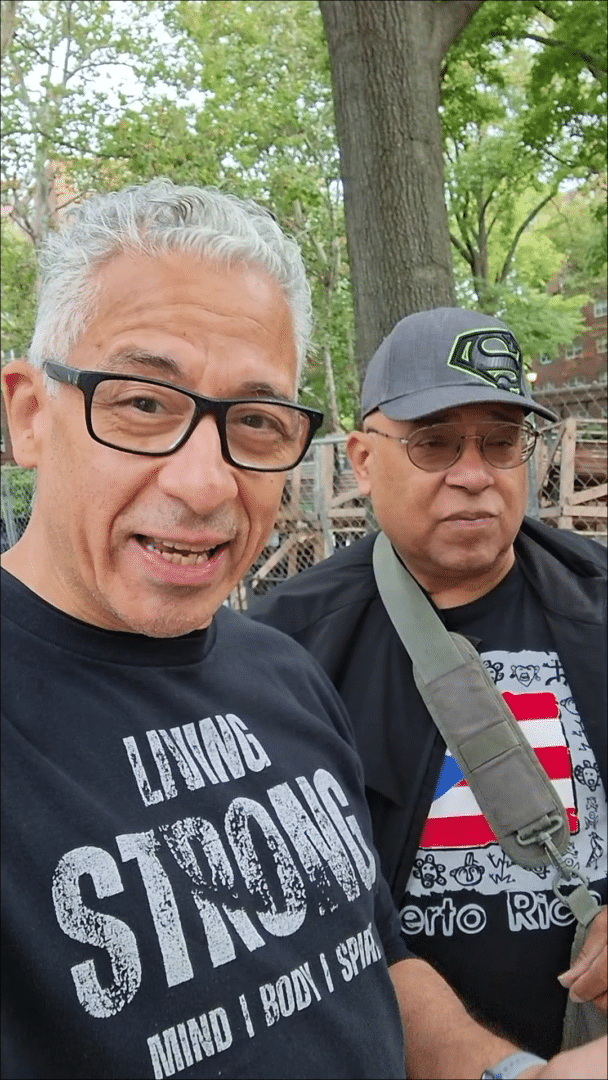
That brings me back to Danny. When we were teenagers and I had nowhere to go, Danny would sneak me into his family’s apartment. His building was about a 15-minute walk from Eastchester Gardens. I would sleep underneath his bed. Danny would leave for school, and I would stay there. Recently, I asked him why he did it. Why did he help me? His answer was simple: “You’re my brother.”
I don’t need to improve that answer or make it more profound than it already is. You’re my brother. Danny also told me something I didn’t fully understand back then. His mother knew I was there. The two of us thought we were secretly getting away with something. She knew, and she would quietly leave food for us. Danny told me that after that experience, his mother would keep an extra mattress available in case somebody else needed somewhere to sleep. Think about that. One person needs a place. Another person makes room. And because of that experience, somebody begins making room for the next person. Sometimes somebody gives you a corner when you don’t have one of your own.
Danny and I spent a lot of time talking about the Bronx and New York. Like two old guys who have lived long enough to have opinions, we talked about things that were wrong, things that had changed and things that frustrated us. Eventually I stopped him and asked, “Is there anything about the Bronx that you love?” He paused. Then he started talking about community. Family. People looking after one another. People taking care of each other. And I realized he was describing the very thing he and his mother had done for me.
The Bronx was a place where difficult things happened in my life. It was also a place where people made room for me. My mother created opportunities. Teachers taught me. Community centers opened their doors. Arthur taught me martial arts. Danny gave me a place under his bed. His mother left food. People helped me reach the next moment. Both stories are true.
There is another part of this journey I understand differently at 65. For much of my life, I didn’t spend a lot of time emphasizing that I was Puerto Rican. It was part of me, of course, yet I often pushed that part of my identity to the side. Today I find myself saying it differently: I’m a Puerto Rican kid from the Bronx. I live in Mount Laurel, New Jersey now, and I love coming home to Mount Laurel. This is my home. Yet the Puerto Rican kid from the Bronx came home with me. Maybe he always has. At 65, I don’t feel that I have to choose between the places I’ve been or the different versions of myself I’ve become. They’re all part of the story.
Later, Danny and I sat together at an IHOP in the Bronx and kept talking. We talked about old friends, girls, schools, dancing, family, choices, mistakes and life. I asked Danny how he hoped people would remember him. He talked about being a good friend, a family man and somebody who made a difference in the lives of the people around him. Not changing the entire world. Making a difference one person at a time.
Then I thought about my own legacy. What do I want my children and grandchildren to remember? I want them to know who I was—not a perfect version of me. Me. The good choices. The bad choices. The mistakes. The growth. The moments when I got it right and the moments when I had to learn. I want them to know that I kept learning to give it my best.
That’s also where my A-Game comes in. For years I’ve asked people, “How’s your A-Game?” For me, that means becoming more Aware of what is happening inside me and around me, taking time to Assess what is actually happening, and then choosing the most Appropriate Action I can. I often come back to three questions: What can I do to make this better? What can I do to not make it worse? What am I missing here? And sometimes I add another: What don’t I know that I need to know so I can make this better and not make it worse?
Those aren’t martial arts questions. They’re human questions. Sometimes the appropriate action is to speak. Sometimes it’s to listen, apologize, walk away, ask for help or make room for somebody. And sometimes the appropriate action is simply to make it to the next moment.
That’s part of what I mean by Living Strong. My book, Living Strong Through Martial Arts: A Lifetime Journey of Martial Virtue, isn’t simply about kicking, punching, forms, belts or fighting. Life supplied the lessons. Martial arts gave me a language and a discipline through which to understand many of them: courage, perseverance, self-control, awareness, responsibility, indomitable spirit and, perhaps most importantly, becoming more skillful at being human.
Character isn’t something we simply talk about. It’s something we practice. Life gives us the practice. That doesn’t mean perfection. It means having a good A-Game, asking better questions, giving it your best and continuing to move forward.
I can look back now and have compassion for the boy sleeping on newspapers without pretending that everything that happened to him was okay. I can have compassion for my mother without pretending that every choice she made was okay. I can look at my parents as complete human beings, and I can look at myself the same way. I have made mistakes. I have hurt people. I have gotten things wrong. I have also learned. I’ve grown. I’ve helped people. I’ve loved. I’ve taught. And I’m still learning. That’s humanity.
Somewhere along the way, people gave me a word, an example, an opportunity, a meal, a place to sleep or a reason to hope. Sometimes the person who gives you hope doesn’t even know they did it. Sometimes one sentence reaches you at precisely the moment when you need a reason to believe your life can still become something different.
That’s one reason I share my story. Not because everything I’ve done should be copied, and not because I’ve figured life out. I share it because somewhere there may be somebody sitting in their own corner who cannot see their future. I know something about that person because I was that person. And if something I’ve lived, something I’ve learned or even one sentence I share can help another human being reach the next moment, then the story is worth telling.
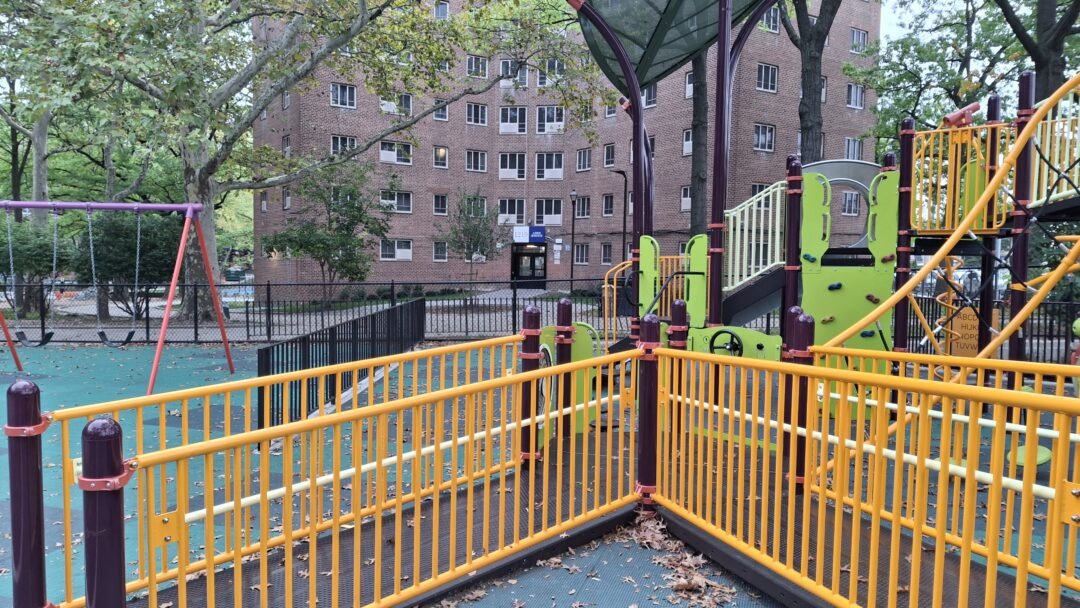
I’ve spent much of my life searching for my corner of the world. Now I understand something I couldn’t have understood as that teenager behind the building: wherever I stand, I can create my corner of the world. It can be a place in Mount Laurel where I practice martial arts, a table at Take Five Café, a conversation with an old friend at IHOP, a book, a classroom, a microphone, or wherever two human beings sit down and tell each other the truth about life.
When I went back to the Bronx, I thought I was going back to look at where I had been. Instead, I found pieces of who I still am: the boy at the Mitchel Houses, the kid at St. Jerome’s, the child climbing the rope, the teenager at Eastchester Gardens, the young martial artist, the kid sleeping behind the building, the friend underneath Danny’s bed and the Puerto Rican kid from the Bronx. They’re all still here. And so is the 65-year-old man who can finally look back at them with a little more understanding.
If I had known how important those moments were, I would have paid more attention. I couldn’t have known. What I can do at 65 is pay attention now. Maybe that’s part of legacy. We live. We learn. We grow. We make mistakes. We help one another. And when we learn something that might help another human being find the strength to reach their next moment, we don’t keep it to ourselves. We pass it on.
So if you ever find yourself sitting with me in my corner of the world, there’s room for you. Sit down. Tell me about your corner. Tell me where you’ve been. Tell me what you’ve learned. I’ll listen. Because I’m still that Puerto Rican kid from the Bronx. I’m just 65 now, and I’ve learned a few things about corners. Sometimes you find one. Sometimes circumstances put you in one. Sometimes somebody makes room for you in theirs. And eventually, if you keep learning, keep asking better questions and keep giving it your best, you may discover that you can create a corner wherever you are—and make room for somebody else.
Welcome to my corner of the world.